Dhekra’s Story
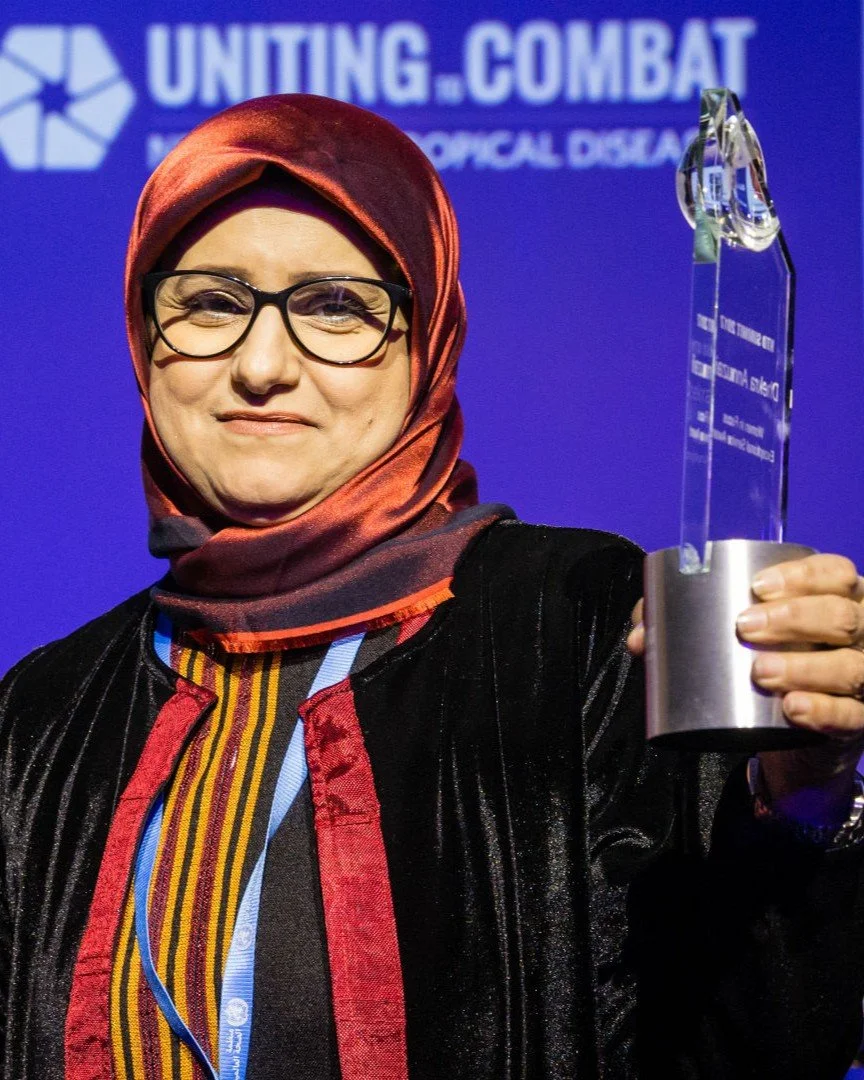
Here is Dhekra’s story, written in her own words. We thank her for taking the time to write about her journey for you to read.
From War to New Shores: My Journey from Yemen to Australia
From a young age, I became interested in how the human body works and was inspired to make a meaningful difference in people’s lives. In my community, access to healthcare was often limited, and I witnessed how illness affected entire families, which planted the early seeds of my ambition to become a doctor.
My motivation to pursue university studies came from a strong belief in education as a pathway to both personal growth and service to others. Despite many challenges, I remained committed to my studies, determined to use medicine to support vulnerable and underserved communities.
I worked in clinical settings as the head of a neonatal unit caring for young patients from diverse backgrounds, diagnosing and treating illnesses, and supporting them through complex health conditions.
I later became deeply committed to disease prevention rather than end-stage treatment, particularly in contexts such as Yemen, where preventive healthcare can create lasting and far-reaching impact. I began my work at the community level in Yemen, working closely with local populations and grassroots health initiatives, before expanding my contributions internationally across the wider Middle East and North Africa region.
Over the past two decades, I have been offered several senior leadership positions by various stakeholders, including the Houthis and the internationally recognized government, with roles reaching the level of Deputy Minister of Health and above. However, I chose instead to serve within the core teams of major international organizations such as UNICEF, World Bank, and World Health Organization, where I contributed to the design and implementation of public health and development initiatives across the region.
I have been recognised internationally for my contributions to public health as well as for my advocacy for women in science and health leadership. I built my career against the odds, supported by my parents, in a context where women’s education and professional growth were not always encouraged.
What I enjoyed most about my work was the human connection. Being able to listen to patients, understand their concerns, and offer care and reassurance was deeply fulfilling. I also valued the continuous learning that medicine and health requires, as it challenged me to grow both professionally and personally. Most importantly, I found meaning in knowing that my work could ease suffering and bring hope to others during some of their most vulnerable moments.
These experiences continue to shape who I am today and reinforce my commitment to serving others with compassion, resilience, and dedication.
Give refugees good news today.
Q: What motivated you to speak out against the Houthi regime, knowing it was a dangerous thing to do?
Speaking out against the Houthi regime was motivated by a profound sense of responsibility towards the people affected by their actions. Witnessing the suffering, injustice, and oppression faced by my fellow citizens including me and later most of the professionals working with the UN, local and international organisations, compelled me to take a stand. The risks were significant, but I believed that raising awareness was crucial to bringing about change and shining a light on the crisis. The hope for a better future and the desire to advocate for human rights and dignity outweighed the dangers involved. Ultimately, it was a commitment to justice and a belief in the power of collective voices that driven me to speak out.
Q: How/Why did you come to Australia? Can you tell us what it was like to flee your home?
I came to Australia by plane, after enduring a harrowing journey that began with a deep sense of desperation and the need for safety. Fleeing my home was not an easy decision; it was driven by the escalating violence and instability in my country.
Leaving behind everything I had ever known felt like tearing my life out by the roots.
Taking my mum with me was a decision heavy with doubt and heartbreak, for both of us. In the end, I had to walk away from the rest of my extended family, my friends, and the community that had shaped me, leaving behind a silence that felt like loss in its purest form. The journey that followed was shadowed by danger and uncertainty, each step marked by fear, each mile carrying the weight of an unknown future.
Q: What were your first months in Australia like?
Arriving in Australia brought a different kind of fear, quieter yet just as consuming. I was unable to bring my mother with me on this journey due to visa constraints, and her absence deepened the haunting sense that I could lose everything all over again. I stepped into this new chapter alone, carrying both relief and a surge of overwhelming emotions.
At the same time, I clung to a single hope: to reunite my family and find some sense of peace.
But living between separation and hope, between presence and absence, left me feeling fractured. That constant tension, that lingering incompleteness, felt almost unbearable.
The first days were defined by disorientation, learning to navigate an unfamiliar culture while still carrying the weight of everything I had left behind. The past did not simply fade; it lingered, shaping how I saw each new beginning. Yet, within that uncertainty, there was also something else: the fragile emergence of hope. Here was a place where safety and freedom were not distant ideas, but real possibilities.
Despite the fear and the challenges, I hold on to a deep sense of gratitude, for the chance to rebuild, to begin again, and to slowly find my place in a new community.
Slowly, I began to build a support network, and as I learned more about Australian culture, I started to feel more at home.
Overall, those early months were a period of significant personal instability. I faced challenges, but I also found resilience and strength within myself, which fuelled my determination to embrace my new life in Australia.
Q: How did you find out about RACS? What kind of things did RACS lawyers do for you?
I found out about RACS through a referral from a female Yemeni friend who had also been supported by RACS until she received her citizenship. She suggested that I contact RACS for legal help with my complicated situation.
The lawyers at RACS helped me understand my rights and the legal process.
They gave me clear and honest advice about my case, helped me prepare my application, and explained what to expect at each stage. They also assisted me in gathering evidence, writing statements, and representing me in legal matters. Their generous support made a very stressful situation much easier to manage.
Q: What did the process of applying for a protection visa involve? What was the hardest part?
The process of applying for a protection visa involved completing detailed application forms, preparing a personal statement, and providing evidence to support my claims. I also had to attend interviews and respond to requests for further information from the Department.
The hardest part was having to revisit and explain painful experiences from my past, and to remember how my home country was shaken and is no longer the safe, protective place it once was.
It was also very difficult to cope with the uncertainty and the long waiting periods, not knowing what the future would hold. It was emotionally challenging and stressful not knowing what the outcome would be.
Q: Can you tell us about the moment when you found out about your permanent visa?
The moment I received news of my permanent visa is one I will never forget. First, it arrived by email, then I received a call from my lawyers at RACS. Their voices carried both excitement and warmth, the kind that comes from people who have worked tirelessly alongside you for a long time. They had become like family to me through the process, and hearing from them felt deeply personal and moving. After such a long and stressful journey, it felt as though a heavy weight had finally been lifted from my shoulders.
I was overwhelmed with relief, gratitude, and happiness as the uncertainty I had lived with for so long finally came to an end.
It also meant something deeper: safety, stability, and the chance to begin building a future without fear.
Yet even in that moment of relief, my thoughts were still with my mother. Her absence meant that the happiness was not complete, and that sense of separation remained with me despite the joy.
Give refugees good news today.
Q: What do you like about Australia?
What I like most about Australia is the sense of safety and stability it offers. I feel that I can live without fear and start re-building a future for myself.
I deeply appreciate the diversity of people and cultures here, as well as the opportunities to work, study, and build a better life. The support I’ve received from the community has made a profound difference, and I value being part of a society where I feel respected and included.
The refugee community here is strong and resilient, with voices that are heard and valued. Many are highly educated, well supported, and represent themselves with dignity and pride.
Q: What are your hopes and dreams for the future?
Building on my professional journey and lived experience as a health professional displaced from Yemen, I deeply understand the trauma, disruption, and barriers to care faced by refugees and asylum seekers. My current work with STARTTS has further strengthened my commitment to supporting their recovery, health, and successful integration in Australia.
Looking ahead, my hope is to continue rebuilding a stable and meaningful life grounded in safety, purpose, and belonging, while using both my personal insight and professional expertise to support others on similar journeys.
I aim to contribute meaningfully to the community and help create pathways to recovery, dignity, and inclusion for refugees and asylum seekers in Australia.
I also hope to support my family and give back to the people and organisations that have supported me throughout my journey. Most importantly, I want to regain a sense of peace and stability, and to rebuild a life grounded in safety and belonging.
Q: What advice would you give to other people seeking asylum who are still waiting for certainty about their visa/future in Australia?
I would say to stay strong, faithful and try to be patient, even though I know how difficult and uncertain the waiting period can be. It’s important to seek support from trusted organisations, friends, or community groups, and not go through the process alone.
I would encourage them to seek reliable legal advice and stay informed about their case, as this can make a meaningful difference. It’s also important to care for your mental health—focus on small, steady steps forward and hold on to hope, even when things feel overwhelming. Support is out there, and situations can change.
At the same time, try to rebuild your independence. Look for work, even if it’s not at your previous level, and take opportunities to engage with the wider community rather than remaining isolated. Integration can open doors, build confidence, and create a sense of belonging.
The uncertainty can feel like a prison but acting, however small, can help you move beyond it and begin to shape a new path forward.
Give refugees good news today.
Q: What would you like the people who donate to RACS to know?
I would like people who donate to RACS to know that their support truly makes a real difference in people’s lives.
Because of their generosity, people like me can access legal help, understand our rights, and have a fair chance to tell our stories.
Their support brings hope during very difficult and uncertain times. It’s not just about legal assistance, it’s about feeling heard, supported, and not alone. I am very grateful, and I hope they know that their contributions help change lives and give people the opportunity to build a safe and stable future.
Q: Is there anything else you would like to share that isn’t covered above?
I would just like to say thank you to everyone who supported me along the way. This journey has been challenging, but it has also shown me the importance of kindness, support, and community. I hope to give back in the future and help others who are going through similar experiences.
-
![Ahmed]()
Ahmed
Ahmed fled the country alone, forced to leave his family behind. He arrived in Australia in 2010, where he was detained on Christmas Island and barred from applying for protection. Despite a 2011 finding that he was a refugee needing protection, Australia did not allow him to even apply for a protection visa, let alone grant him the safety he needed.
-
![Alaa and Suha's story]()
Alaa and Suha
Alaa and Suha grew up with the threat of violence as an everyday reality. They’d lived through several conflicts and kept a “go bag” of their identity documents handy, ready to evacuate at any time.
-
![]()
Maryam
Maryam and her family arrived in Australia in 2012. With no protection, no support and no finances, the family’s situation seemed bleak. Read more to hear how RACS was able to assist Maryam to gain permanent safety in Australia.
-
![]()
Jeanine
When Jeanine fled her home country in East Africa, she became separated from her two sons. After reaching out to RACS, she was granted a permanent visa and from there, was able to apply to be reunited with her children in Australia.