
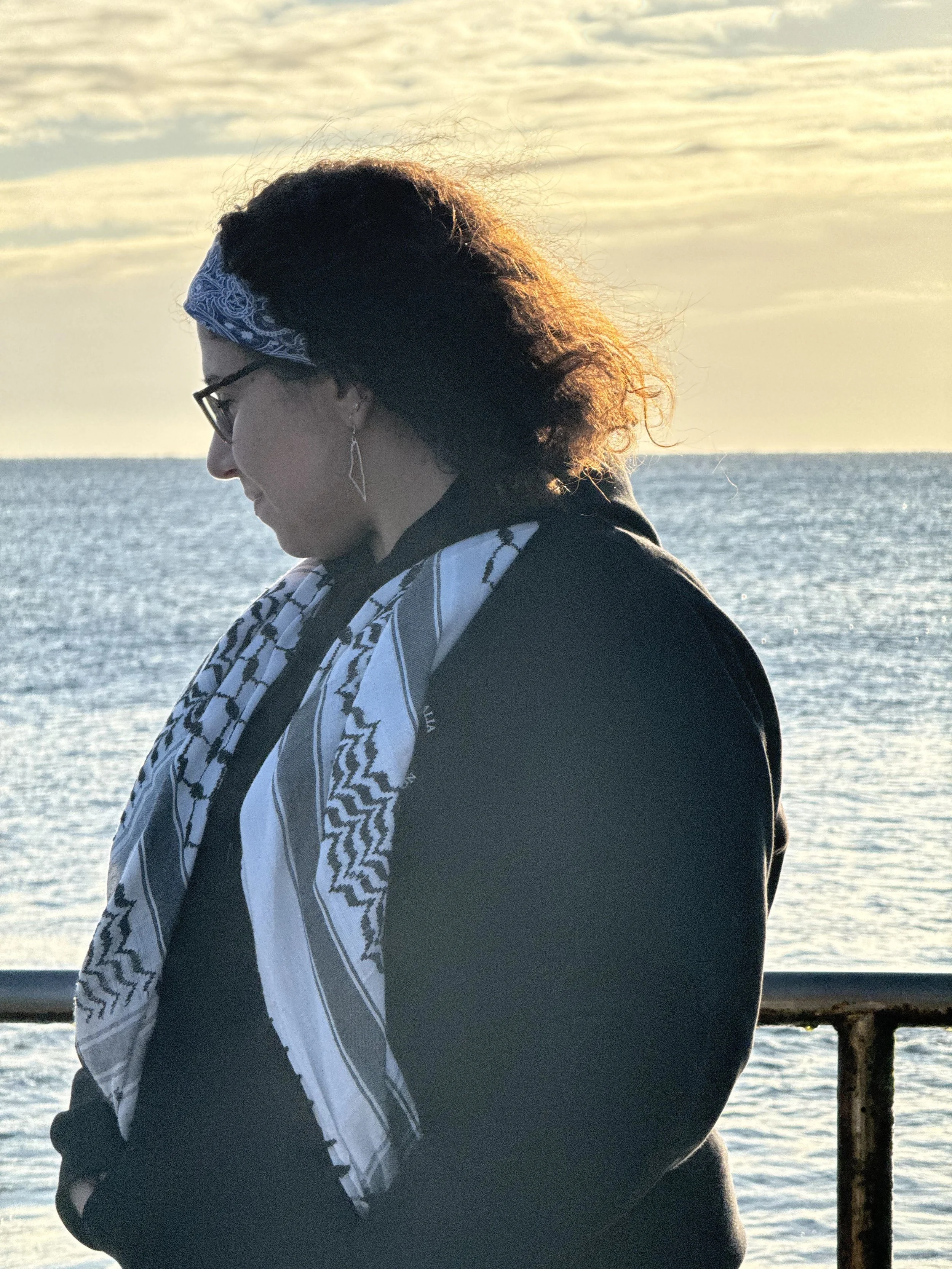
Alaa and Suha’s Story
Alaa and Suha have some bright memories of everyday moments from their childhood. Early morning family picnics at the beach in winter. Watching and gossiping with friends about Syrian period drama Bab al-Hara (“The Neighbourhood Door”).
But their early lives were also marked by the constant threat of violence.
“It wasn't normal, of course,” Suha says. “Like waking up to explosions every third night is not normal.”
Alaa agrees. “The fact that a child needs to memorise a safe plan, how to evacuate, how to live safely, how to hide, how to make sure that every member of the family is safe? That all was really extreme.”
By 2023, the young women had already lived through several conflicts. But this war would be the one that changed their lives forever.
Evacuation
At that time, Suha was studying abroad and out with friends when they showed her the headlines. She remembers her emotional turmoil at being separated from her family, knowing they were in danger.
“There was no electricity. There was no internet. For days I wouldn't know if they're alive or dead. The news would just say a general neighbourhood that was bombed. Was it my neighbourhood? Like where? Like close to our house?”
Shortly afterwards, all communications from Gaza were cut and she only heard from her father after he managed to wire a car battery to a landline to tell her Alaa and the family were safe.
Their home would not be safe for long. A couple of weeks later, Alaa heard a neighbour shouting from a balcony that their street was about to be bombed.
There wasn’t even time to put shoes on. She grabbed a pair of shoes in one hand, her identity documents in the other – and ran.
Through a family friend, Alaa and her parents found shelter in another town. The building housed 28 families, with each bathroom shared between five families. But nowhere was truly safe and they always had to be ready to flee.
Escape from Gaza
“Then one night, we received a phone call late, late at night,” Alaa remembers.
“We were all asleep. Usually in Gaza, in those times, when you receive a phone call it's only two options. It's either someone pranking you to evacuate, or it's actually a call to evacuate.”
This time, it was neither. On the other end of the line was Alaa’s aunt, telling them she would apply for visas for them to come to Australia where she lived. Yet in a place ravaged by war, it was a mammoth effort to secure a missing passport and even to make copies of identity documents for the visa application.
Alaa says, “We spent two days just looking for a place that got a scanner. That was a nightmare. Just finding a scanner to scan the documents.”
They now had a destination – if they could find a way to leave Gaza.
Border crossings were closing and the family would spend many months desperately looking for a way to get out of Gaza. All the while, they were barely surviving on meagre rations and had to evacuate a second time when their shelter was bombed.
Internet was sporadic and generally only available between 1am and 3am. So Aala, dressed as a boy, would venture out with her mother in the middle of the night to find an internet connection and check if their names had made “the list” to leave.
Just when they had given up hope of ever escaping and reuniting with Suha, their names finally did appear on that list. After months of desperation and ever present danger, Alaa and her family crossed the border and boarded a flight Australia.
Help people like Alaa and Suha fleeing conflict find lasting safety
Arrival in Australia
Suha had arrived earlier with support from her aunt. It was a comfort to be safe under her aunt’s roof, spending time with her cousins. But as the weeks passed, in every news report, she would see the name of somebody she knew who had been killed: a family friend, a classmate.
“At that time, I just stopped looking at the news. I knew that I if I kept watching and watching [it would damage] my mental health.”
And, like her family in Gaza, Suha was religiously checking border crossing lists. The morning she saw their names, she jumped out of bed and told her uncle, who called her aunt.
“Because it's public, all the congratulations started – like people from like family or friends around the world saying, ‘Oh, we saw their names! Congratulations!’”
They were lucky to be alive, and to be together.
Once her family arrived, Suha took on the role of applying for protection visas for all of them, diligently filling in application forms. But she realised she would need professional help with preparing statements – a key part of the application which sets out the reasons they feared harm and could not return to Gaza.
Legal help in the face of uncertainty
The family came to RACS for help. Preparing their statements meant recalling many difficult things from the past, speaking them out loud for the first time.
“It was quite emotional for us because it was the first time that we compiled everything that we felt,” Suha says.
“The RACS lawyer just asked us the questions, she gave us the time to answer – like space to put out our emotions, cry if we needed to.”
Alaa agrees. “With the assistance of RACS we started feeling those things that we've never we've never had, or we've never had the luxury of having or thinking about. [I realised] I'm in a safe place. There's stability, there's independence. There's respect from others.”
Another challenge for Alaa and Suha was uncertainty about their future. At one point, it looked like they might only be allowed to stay three years in Australia. After that, they would have nowhere to go.
Because visa rules kept changing, there was a great deal of confusion and concern among the community in Australia. To address this, RACS organised information sessions.
Hearing from RACS lawyers helped Alaa and Suha’s family understand their legal rights and allayed some of their fears. They had the assurance that RACS was there to support them, whatever happened, and that they would still have options at the end of the three years.
Light the way to lasting safety for people like Alaa and Suha with a donation.
A bright future
Earlier this year, the family received the good news they’d longed for: they were all given not three years but permanent protection in Australia.
Alaa remembers the day her father called her:
“I started crying and he started crying from the other end. We all were crying. And it was like, oh my God, I'm a free person now.”
The family can now build a new life here without fear of being moved on. These days, Suha’s biggest fear is being swooped by magpies – a far cry from what they fled in Gaza.
Initially Alaa hadn’t liked Australia because it wasn’t home. Soon, her perspective started to shift.
“I started seeing diversity. I start seeing the real Australia or I start seeing the real life, how real life looks like. How you can be yourself, be respected, have your own thoughts, have your own faith, have your own ideas, have your own hairstyle, have your own dress code.”
The sisters have dedicated themselves to careers caring for others: Alaa is a caseworker for a domestic violence service while Suha is studying nursing.
For a recent birthday, Alaa wore a dress for the first time in her life and went on her first ever holiday – a solo trip to Perth.
The sisters and their family are safe. They’re free. And after all they have been through, they have a bright future ahead of them.
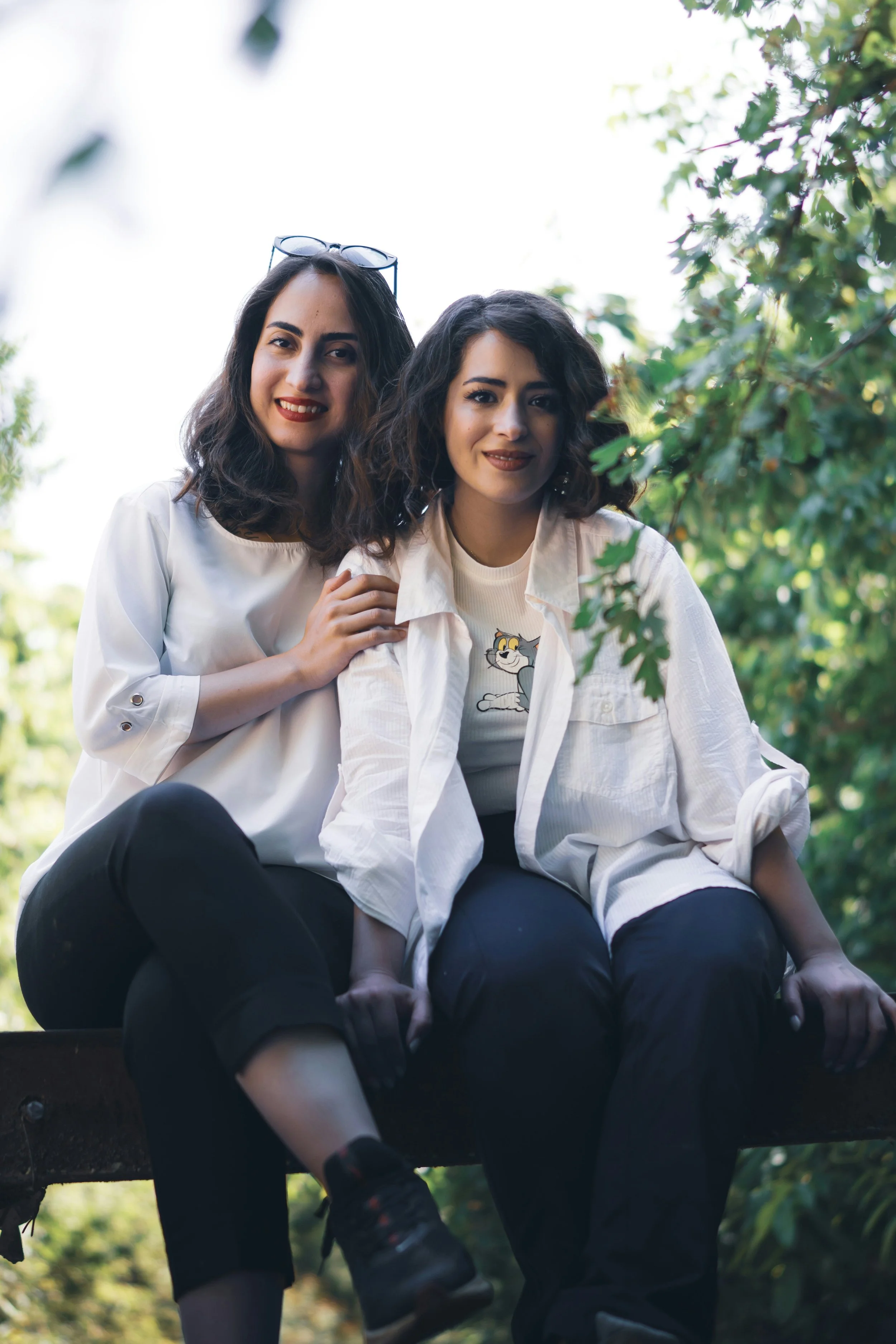
A combination of stock and deidentified supplied photos has been used to protect the identities of Alaa and Suha.
-
![]()
Maryam
Maryam and her family arrived in Australia in 2012. With no protection, no support and no finances, the family’s situation seemed bleak. Read more to hear how RACS was able to assist Maryam to gain permanent safety in Australia.
-
![]()
Jeanine
When Jeanine fled her home country in East Africa, she became separated from her two sons. After reaching out to RACS, she was granted a permanent visa and from there, was able to apply to be reunited with her children in Australia.
-
![]()
Emil
Emil arrived in Australia alone in 2002, after fleeing religious persecution in his home country. When he reached out to RACS for support in applying for protection, he didn’t know that same support that would extend to another family member, many years later.
-
![]()
Ali
At just 16 years old, Ali Haidari arrived in Australia alone, having fled his home country of Afghanistan. Ali was determined to build a future in Australia, but he understood that would be impossible without first being granted a protection visa.


